
The AC Aceca
& Aceca-Bristol
The AC Aceca is the hand-built aluminium coupé AC Cars produced at Thames Ditton from 1954 to 1963. This is the definitive independent archive of the Aceca and the Aceca-Bristol: what the car is, how it was built, what the three variants are, what one is worth, and where the surviving cars are.
AC's elegant fixed-head coupé, hand-built in Surrey.
The Aceca was the closed-roof sibling of the AC Ace and a direct ancestor of the Shelby Cobra, a lightweight aluminium-bodied grand tourer, coach-built at Thames Ditton with hand-formed aluminium panels over a small steel-tube superstructure, with ash in the doors and rear hatch. Just 328 examples left the factory across nine years of production, each one shaped, trimmed and finished by hand.
What the AC Aceca is
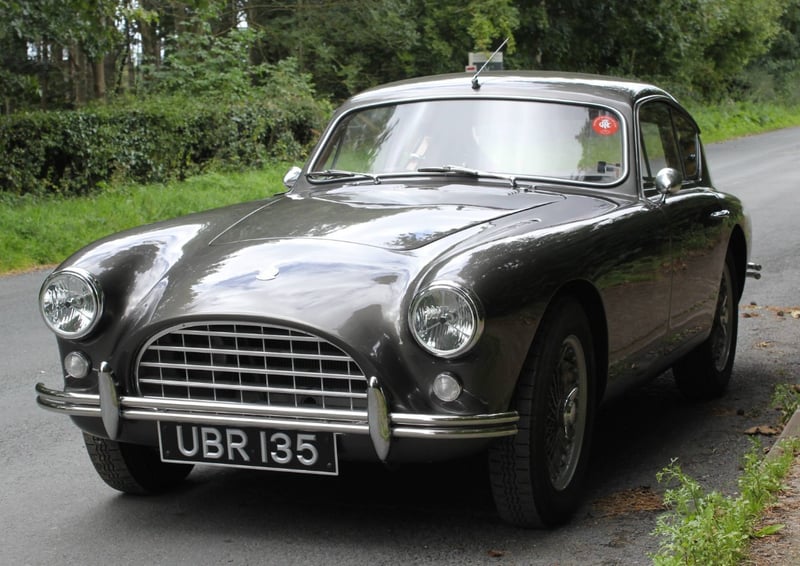
The AC Aceca is a two-seat fixed-head coupé, hand-built by AC Cars at Thames Ditton in Surrey between 1954 and 1963. It was launched at the Earls Court motor show in October 1954 as the closed-roof sibling of the AC Ace, using a strengthened version of that car's chassis, with the same engines and suspension layout, beneath an aluminium fastback body of its own.
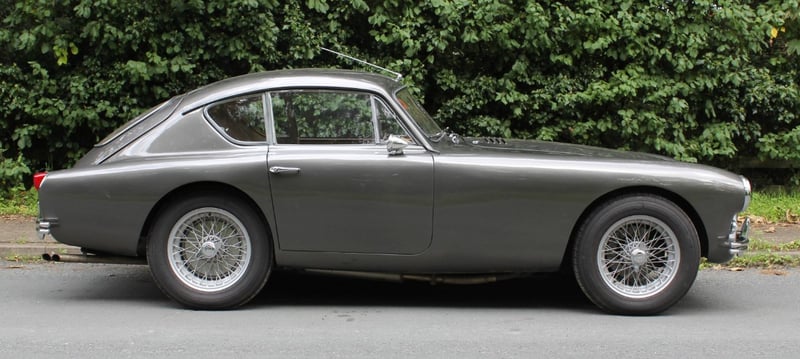
Underneath is John Tojeiro's design: a ladder frame of large-diameter steel tube, with all-independent suspension by transverse leaf springs at both ends. The body uses a superstructure of small steel tubes carrying aluminium panels formed by hand, with ash frames in the doors and rear hatch and glass-fibre bulkheads. Nothing about it was pressed or jigged in quantity. Every car was shaped, trimmed and finished individually, which is why no two are quite identical and why originality is difficult to judge from photographs alone.
Three engines, one shape
The Aceca was offered with three quite different straight-sixes, and the engine is what separates the variants.
The original car used AC's own 1,991 cc Light Six, an overhead-camshaft design whose origins run back to 1919, producing around 100 hp. 151 were built. From 1956 the Aceca-Bristol used Bristol's 1,971 cc six, a descendant of the pre-war BMW 328 engine, and it is the one that made the car a genuine 120 mph continental grand tourer. 169 were built, making it both the most numerous variant and today the most sought-after. Finally, between 1961 and 1963, eight cars left the works as the Aceca 2.6, using a 2,553 cc Ford Zephyr engine reworked by Ken Rudd's Ruddspeed concern to as much as 170 bhp. It was the fastest of the three and the rarest by a wide margin.
The chassis prefix records which engine the car left the factory with: AE for the AC engine, BE for the Bristol, RS for the Ruddspeed Ford. An X, as in AEX, BEX or RSX, denotes a left-hand-drive car, according to the AC Owners' Club.
How many were built
The figure usually given is 328, and that is the total this archive uses. It should be treated with care. Published sources put it variously between 300 and 370, and no primary factory record has been produced that settles it. The production page sets out the competing figures and where each of them comes from, rather than picking one and presenting it as fact.
Two things the Aceca is often credited with
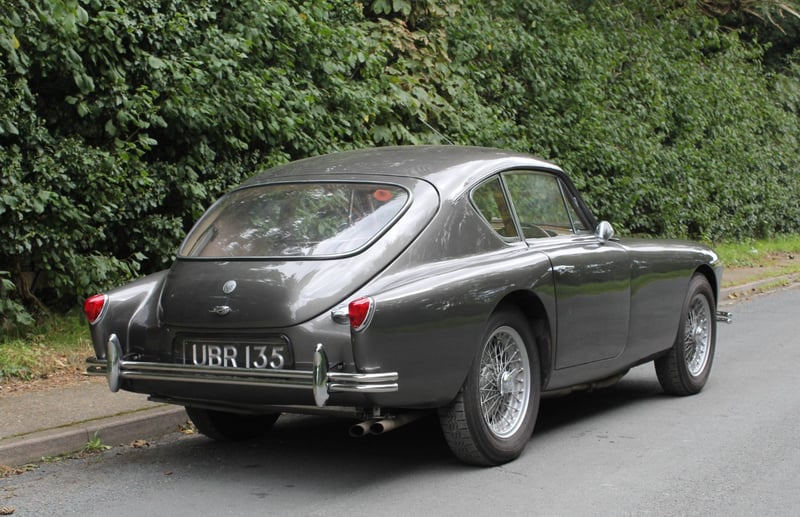
It is frequently called the first hatchback. It was the second. The Aston Martin DB2/4 of October 1953 had a lift-up rear tailgate a year earlier; the Aceca followed in October 1954.
It is also, quite correctly, called the Cobra's ancestor. The Aceca's strengthened version of the lightweight Tojeiro ladder chassis is closely related to the Ace chassis Carroll Shelby asked AC's Charles Hurlock to fit a Ford V8 into in 1961. The car that resulted, unveiled the following year, is the Aceca's direct mechanical descendant.
What one is worth
Values turn on engine, originality and history. The Bristol-engined car commands the most, from the low tens of thousands of pounds for a project to around £220,000 for the very best. The AC-engined cars sit below that, and the 2.6 is too rare to price by pattern.
UBR 135, 1958 AC Aceca-Bristol
One of just 169 Bristol-engined Acecas, matching-numbers, with an unbroken six-decade history and a Bristol six rebuilt by Stanton Motorsport with Cosworth pistons to around 140 bhp.
Read the featureOne silhouette, three characters.
Aceca
The original Aceca, powered by AC's own long-serving 100 hp overhead-cam six. The purest expression of Thames Ditton engineering.
Aceca-Bristol
The connoisseur's choice. BMW-derived Bristol power transformed the Aceca into a genuine 120 mph continental grand tourer.
Aceca 2.6
The rarest of the line. A late-production experiment with Ken Rudd-tuned Ford power, foreshadowing the Cobra to come.
Quick answers about the Aceca.
More questions? Read the full FAQ. Have a correction, or a car to add? Get in touch, this archive is maintained by an owner and improved by owners.
This archive is tended regularly.
Winter storage: new section on mice, rats and a stored car.
Winter storage: new section on mice, rats and a stored car.
Added AC Cars Compared, 1904 to 2026, with a chart of post-war production years.
Added AC Cars Compared, 1904 to 2026, with a chart of post-war production years.
Added the door latch inspection tools
Added private browser-saved inspection cases with archive-grounded guidance and a printable checklist covering symptoms, door usage, steering conversion history and recorded checks.
Added AC Cars: The Complete History.
Added AC Cars: The Complete History.
Do you own an Aceca?
The chassis registry is an ongoing project to trace every one of the 328 Acecas built. If your car, or one you know of, is not yet listed, we would be glad to hear from you.