AC Aceca
Three Variants · 1954 – 1963

One silhouette,
three engines.

Across nine years of production the Aceca was offered with three quite different straight-sixes. The chassis prefix on each car tells you which: AE for the AC engine, BE for Bristol, RS for the Ford unit — with an added X (AEX, BEX, RSX) marking a left-hand-drive export car.

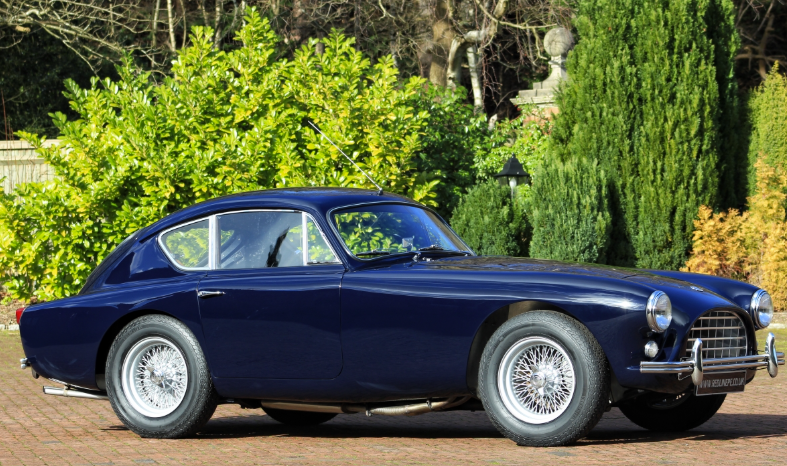
AC-engined Aceca coupé, chassis prefix AE, side profile
Caption — The original Aceca — powered by John Weller's Light Six, a design conceived in 1919 and built with continuous development until 1963.
1954–1961 · 151 built · Chassis prefix AE

Aceca

The original — the most vintage-feeling to drive.

The original Aceca used AC's own 1,991 cc Light Six, a remarkable overhead-camshaft aluminium straight-six designed in 1919 by company founder John Weller and still in production more than four decades later. Producing around 90 bhp and good for about 103 mph, it is torquey, characterful, and unmistakably pre-war in feel — the most vintage-driving of the three.

Engine
AC Light Six (Weller, 1919 design)
Displacement
1,991 cc
Power
≈ 90 bhp
Top speed
≈ 103 mph
0 – 60 mph
≈ 11 s
Built
151 cars
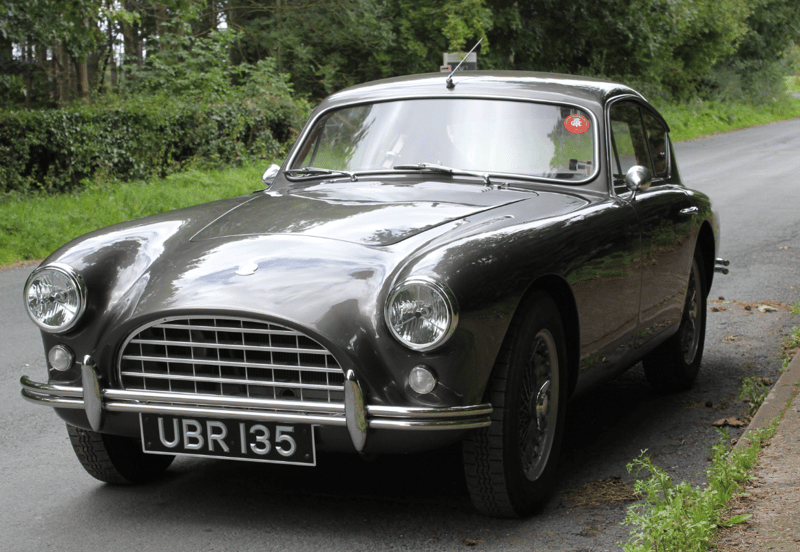
Aceca-Bristol UBR 135, chassis prefix BE, front three-quarter view
Caption — The most sought-after Aceca. The Bristol two-litre six lifted performance into genuine grand-touring territory.
1956–1963 · 169 built · Chassis prefix BE

Aceca-Bristol

The most celebrated and sought-after.

The Aceca-Bristol is the connoisseur's choice. Its 1,971 cc Bristol six — descended from the pre-war BMW 328 with hemispherical combustion chambers and its curious transverse-pushrod valvetrain — produced roughly 105 to 128 bhp, lifted top speed to 116 – 128 mph and cut the 0 – 60 mph sprint to around nine seconds. It transformed the car from a charming coupé into a genuine continental grand tourer, and remains the most celebrated of the three.

Engine
Bristol two-litre six (BMW 328 derived)
Displacement
1,971 cc
Power
≈ 105 – 128 bhp
Top speed
≈ 116 – 128 mph
0 – 60 mph
≈ 9 s
Built
169 cars
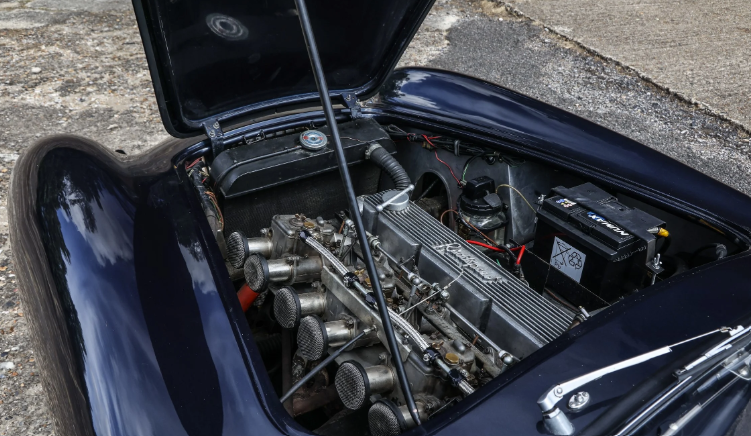
Ruddspeed-tuned Ford Zephyr six engine bay in an AC Aceca 2.6
Caption — The Ruddspeed-tuned 2.6-litre Ford Zephyr six with triple carburettors — the engine that defined the rarest and fastest Aceca.
1961–1963 · 8 built · Chassis prefix RS

Aceca 2.6

The rarest and the fastest.

The final version used a 2,553 cc Ford Zephyr six — a Ford unit, not an AC engine and not an enlarged AC engine — extensively reworked by Ken Rudd's Ruddspeed concern with triple carburettors. In the hottest states of tune it produced as much as 170 bhp, was good for around 130 mph, and reached 60 mph in roughly 8.1 seconds. Only eight Acecas were built this way, making it comfortably the rarest and the fastest of the three.

Engine
Ford Zephyr six (Ruddspeed-tuned)
Displacement
2,553 cc
Power
up to ≈ 170 bhp
Top speed
≈ 130 mph
0 – 60 mph
≈ 8.1 s
Built
8 cars
Side by side

At a glance.

Aceca
Years built
1954–1961
Number built
151
Chassis prefix
AE
Engine
AC Light Six (Weller, 1919 design)
Displacement
1,991 cc
Power
≈ 90 bhp
Top speed
≈ 103 mph
0 – 60 mph
≈ 11 s
Aceca-Bristol
Years built
1956–1963
Number built
169
Chassis prefix
BE
Engine
Bristol two-litre six (BMW 328 derived)
Displacement
1,971 cc
Power
≈ 105 – 128 bhp
Top speed
≈ 116 – 128 mph
0 – 60 mph
≈ 9 s
Aceca 2.6
Years built
1961–1963
Number built
8
Chassis prefix
RS
Engine
Ford Zephyr six (Ruddspeed-tuned)
Displacement
2,553 cc
Power
up to ≈ 170 bhp
Top speed
≈ 130 mph
0 – 60 mph
≈ 8.1 s
Common to all

Shared architecture.

Whichever engine was fitted, every Aceca that left Thames Ditton shared the same essential structure and running gear.

Body
Hand-formed aluminium over an ash timber frame
Chassis
Tubular steel ladder frame
Kerb weight
≈ 895 kg
Wheels
16-inch wire
Suspension
All-independent, transverse leaf springs and lower wishbones front and rear
Brakes
Drums to 1957; front discs optional from 1957 and standard from 1958
Steering
Worm and Bishop-cam (frequently converted to rack-and-pinion in period and later)
Gearbox
Four-speed manual, overdrive optional

A note on figures: exact numbers vary slightly between historical sources, and individual cars differ by state of tune. The values here reflect the most widely accepted period and marque-specialist figures.

See also

The AC Greyhound — a four-seater sister car.

Built at Thames Ditton in parallel with the Aceca-Bristol from 1959 to 1963, the Greyhound shared the Bristol two-litre six on a longer, coil-sprung chassis with room for four.

Read the AC Greyhound story
Comparison

AC Ace vs AC Aceca — roadster and coupé.

The Aceca shares its Tojeiro chassis and engine options with the better-known AC Ace roadster. See how the closed coupé and the open sports car compare on weight, performance and practicality.

Read Ace vs Aceca