Chassis, body & construction
This page covers how the car was engineered and built: John Tojeiro's large-diameter tubular-steel ladder chassis, all-independent suspension by transverse leaf springs, the brakes, and a superstructure of small steel tubes carrying hand-formed aluminium, with ash frames in the doors and rear hatch. For the wider story of the AC Aceca, start at the archive's home page.
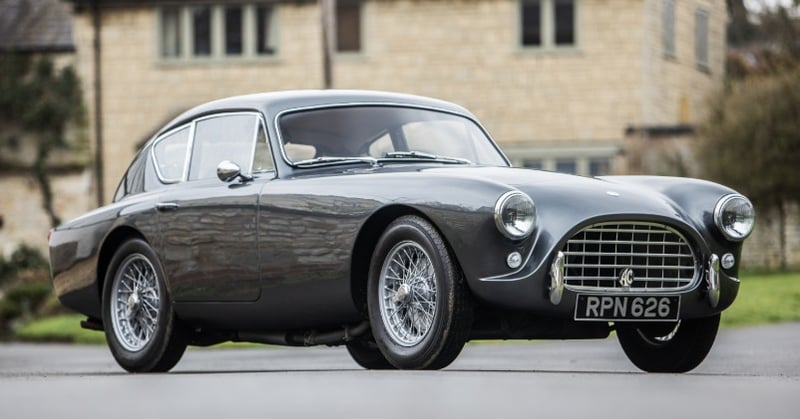
A racing chassis beneath the couture
Underneath every Aceca lies a tubular steel ladder-frame chassis designed by John Tojeiro, the independent engineer whose earlier work had already pointed the way toward the AC Cobra. Twin longitudinal tubes formed the backbone, with cross-bracing and outriggers to support the body and suspension. The result was light, stiff, and responsive, a structure more at home on a racetrack than in a coachbuilder's workshop, yet it was exactly that combination of agility and refinement that defined the Aceca's character.
Suspension was all-independent, using transverse leaf springs and lower wishbones at each corner. The front disc brakes that became standard from 1958, together with the car's low kerb weight of around 895 kg, gave it stopping power and cornering poise that belied its elegant appearance.
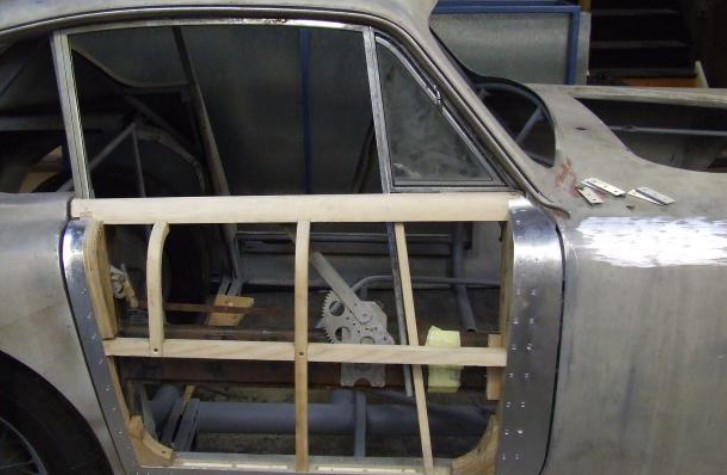
The composite body frame: coachbuilding by hand
AC Cars was one of the last British manufacturers to build bodies in the old way. Over the Tojeiro tubular-steel chassis, craftsmen erected a superstructure of small welded steel tubes to carry the aluminium panels. Ash frames were used in the doors and rear hatch, while glass-fibre bulkheads separated the engine from the cabin and closed the space behind the seats. Each ash frame was cut, shaped and fitted by hand, a method little changed since the coachbuilders of the Edwardian era.
That combination of materials under the alloy skin gives the Aceca its distinctive solidity and quietness on the road, but it also creates the two decay paths every owner must watch for: galvanic corrosion where the aluminium panels meet the steel framing, and timber rot where damp becomes trapped in the ash-framed doors and rear hatch. Both are arrestable if caught early; both are ruinous if ignored. For the full buyer's-education deep-dive, see The Aceca body: aluminium, steel and ash.
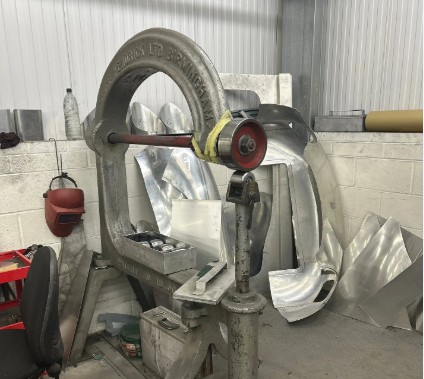
Aluminium shaped on the wheel
The Aceca's body panels were formed from aluminium, beaten and smoothed on English wheeling machines by men who had learned the craft over decades. Each wing, door and panel was shaped to fit its individual section of the small steel-tube superstructure, which meant no two cars were ever quite identical. The finish was lead-loaded and filed before priming and painting, a labour-intensive process that produced the flawless, liquid surfaces the marque was known for.
The material choice was deliberate. Aluminium was light, durable and easy to repair, essential qualities for a low-volume manufacturer selling cars to enthusiasts who intended to use them hard. It also helped keep weight down, contributing to the Aceca's lively performance despite modest engine outputs.
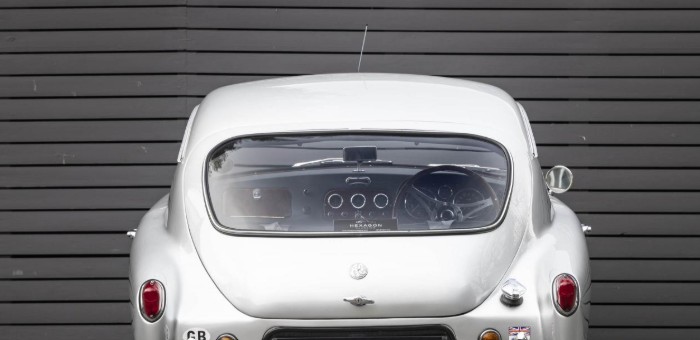
Fibreglass for refinement
While the exterior panels were aluminium, the Aceca made intelligent use of the newer material of fibreglass for internal mouldings. Bulkheads, footwells and other cavity closures were formed in glass-reinforced plastic, helping to seal the cabin against draughts, dust and road noise. This was a thoughtful compromise: the traditional glamour of aluminium outside, the practical benefits of modern composites where they mattered most.
The result was a car that felt more civilised than its open sibling, better suited to long-distance touring and everyday use, without surrendering the tactile, hand-built quality that set AC apart from mass-produced rivals.
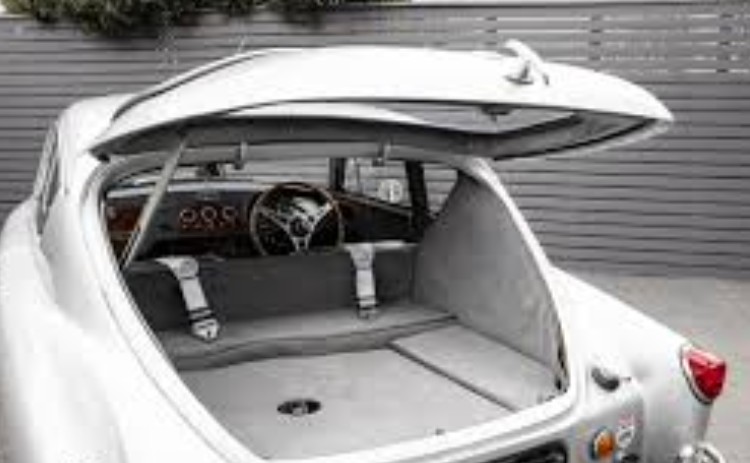
The hatchback before hatchbacks
The Aceca's most distinctive visual feature was its fastback roofline, sweeping uninterrupted from the base of the windscreen to the tail and resolving in a lift-up rear tailgate. That tailgate was not merely a styling flourish: it made the Aceca only the second production car in the world, after the Aston Martin DB2/4, to feature a true hatchback.
In an era when most sporting coupés made do with a small boot lid, the Aceca offered a wide, practical opening into a carpeted rear luggage area. It transformed the car from a strict two-seat grand tourer into a genuine long-distance companion, capable of swallowing luggage for a continental holiday.
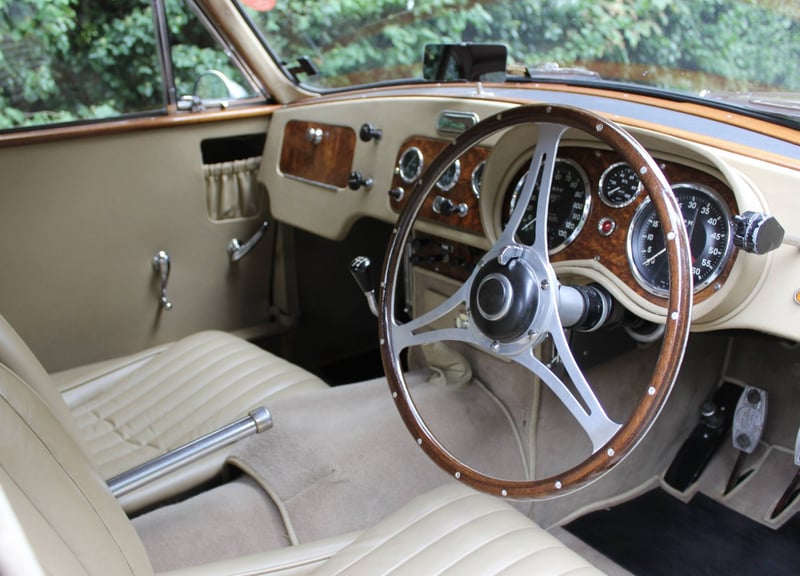
A cabin of leather, walnut and wool
Inside, the Aceca lived up to its bespoke promise. The seats were leather-trimmed buckets, supportive enough for brisk driving yet comfortable over a full day's journey. Walnut was used around the windows and on the dashboard ahead of the driver, set against painted metal, and a full set of instruments monitored oil pressure, water temperature, amperage, fuel and speed.
Behind the seats, beneath that practical hatch, lay a carpeted luggage area large enough for real luggage. The overall impression was of a gentleman's sporting coupé: fast, refined, and finished with the materials and attention to detail expected of a hand-built car from Thames Ditton. The archive's guide to interior and trim covers what originality looks like inside a surviving car and what a sympathetic retrim involves.
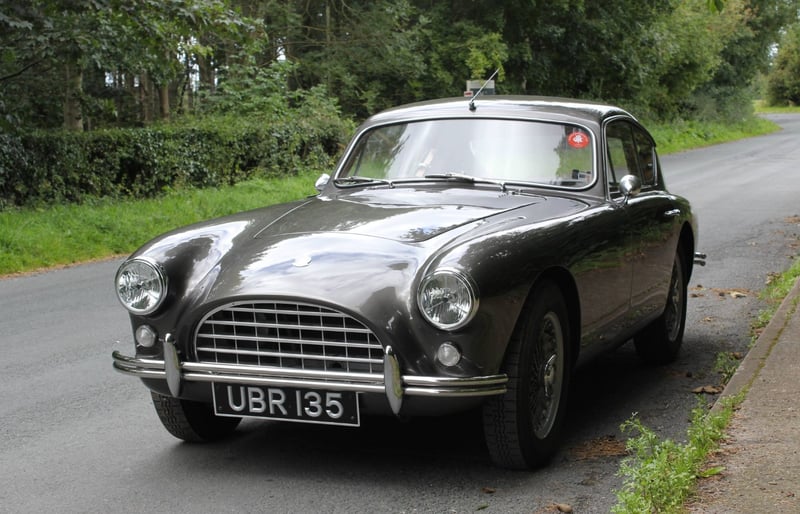
Styling lineage: Italy meets Surrey
The Aceca's proportions owed much to the barchetta tradition exemplified by the Ferrari 166 MM, long bonnet, compact cabin, short tail, translated into a fixed-head coupé with a wrap-around rear screen and delicate pillars. The overall effect was at once sporting and elegant, a car that looked as natural parked outside a grand hotel as it did on a starting line.
The front-end lines, with their restrained grille and rounded headlamp nacelles, have often been attributed to a Pinin Farina proposal for AC. Whether or not the Italian studio's sketch became the final design, the result was unmistakably international in flavour: continental sophistication built with British craftsmanship.
Dig deeper into the Aceca
Tuning the AC Aceca
Triple carburettors, SU, Solex or Ruddspeed, and the Lucas distributor: an owner's overview of balancing, mixture and ignition.
Open the tuning pageThe Bristol Engine
From the BMW 328 to war reparations and the Aceca-Bristol: the story of the two-litre six that transformed the car.
Read the full storyServicing the Solex Carburettors
Removing, dismantling, reconditioning, reassembling and tuning the triple Solex setup on the Aceca-Bristol.
Open the guideAceca vs DB2/4
The two British hatchback grand tourers of the 1950s compared: design, performance, rarity and legacy.
Read the comparison
About the author
A lifelong classic-car enthusiast in North Yorkshire, near Thornton-le-Dale, who owns and maintains an AC Aceca, writing the single-model reference he always wished existed. Read the full bio.