The Aceca-Bristol:
The One to Have
Fitted with the legendary Bristol two-litre six, the Aceca-Bristol is the most celebrated, most capable, and most sought-after of all Acecas. 169 were built between 1956 and 1963, and they turned a pretty coupé into a genuine race-bred grand tourer.
A better heart
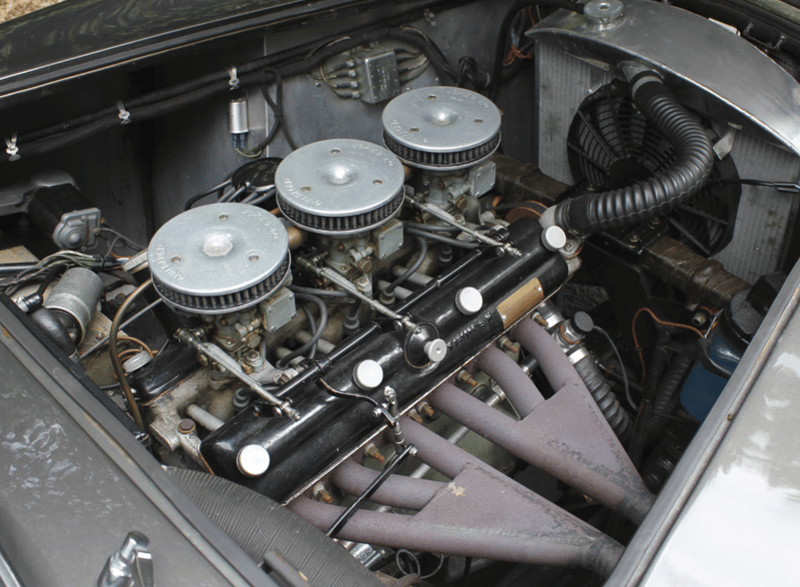
The Aceca-Bristol takes its name from the two-litre straight-six built by Bristol Cars and offered by AC from 1956, when the company's own Light Six had reached the limit of its development. Descended from the pre-war BMW 328, a design brought to Britain as war reparations, it was an engine of real pedigree, with a cast-iron block, an aluminium cross-flow head with hemispherical combustion chambers, and an ingenious valvetrain in which the exhaust valves are worked by long transverse pushrods running across the top of the engine, giving it the deceptive appearance of a twin-cam. Three downdraught carburettors completed the picture. For the full story of this remarkable engine, see the Bristol Engine page.
States of tune
The Bristol engine was offered in several specifications. Milder "B-Type" units gave around 105 bhp; the more powerful "D-Type" versions produced roughly 125 to 128 bhp, and later D2 engines could be specified with higher compression for still more performance. In full competition tune, as much as 150 bhp could be extracted. Whatever the specification, the effect was transformative: top speed rose to somewhere between 116 and 128 mph, and the 0-60 mph sprint fell into the nine-second bracket, all delivered through a Bristol four-speed gearbox, frequently paired with overdrive.
“This is the Aceca that could race, and win.”
Bred for competition
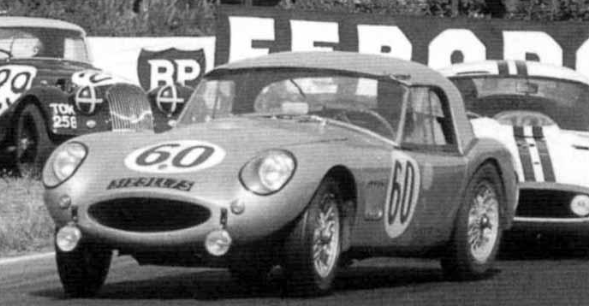
The Bristol engine did not just make the Aceca faster; it gave it a racing soul. In its open Ace form the same package took class honours at the Le Mans 24 Hours in the late 1950s and became a force in production sports-car racing on both sides of the Atlantic, much of it associated with the engineer and racer Ken Rudd. The Aceca coupé shared every bit of that mechanical pedigree, its closed body making it a swift and civilised companion for fast, long-distance touring and rallying alike.
Identity and rarity
Bristol-engined cars carry chassis numbers beginning BE, or BEX for a left-hand-drive car, according to the AC Owners' Club. 169 were built.

About the author
A lifelong classic-car enthusiast in North Yorkshire, near Thornton-le-Dale, who owns and maintains an AC Aceca, writing the single-model reference he always wished existed. Read the full bio.