Chassis Numbers
& Notable Cars
How to read an AC Aceca chassis number, what the prefixes mean, and the individual cars that stand out from the 328 built.
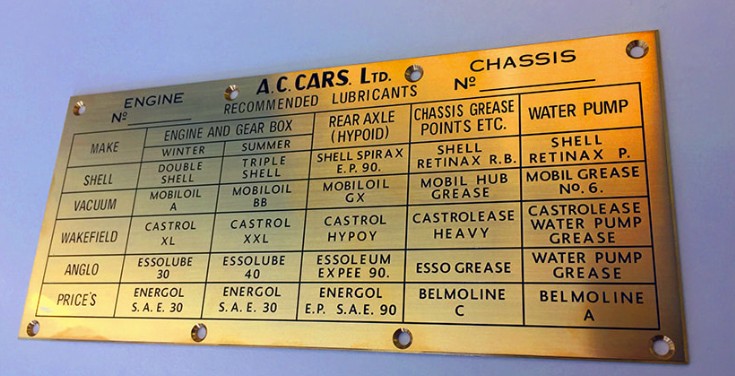
Decoding the chassis prefix
Every Aceca carries a chassis number that begins with a two-letter code identifying its engine. An added X after the prefix, AEX, BEX or RSX, denotes a left-hand-drive car, according to the AC Owners' Club. Some cars have since been converted, including X cars to right-hand drive and non-X cars to left-hand drive.
- AE
- AcecaAC Light Six engineThe original AC-engined car.
- BE
- Aceca-BristolBristol two-litre sixThe most celebrated and sought-after variant.
- RS
- Aceca 2.6Ford Zephyr Ruddspeed engineThe rarest and fastest of the three.
Production totals
Production of the Aceca family ran from 1954 to 1963. The totals below are the most widely accepted figures for each engine variant.
| Variant | Built |
|---|---|
| Aceca (AE) | 151 |
| Aceca-Bristol (BE) | 169 |
| Aceca 2.6 (RS) | 8 |
| Total | 328 |
A note on the numbers: some published totals differ slightly, you will see figures around 300, 326 or 328 quoted in different sources. Surviving-car counts are estimates, because records for a hand-built car of this era are incomplete.
Notable Cars
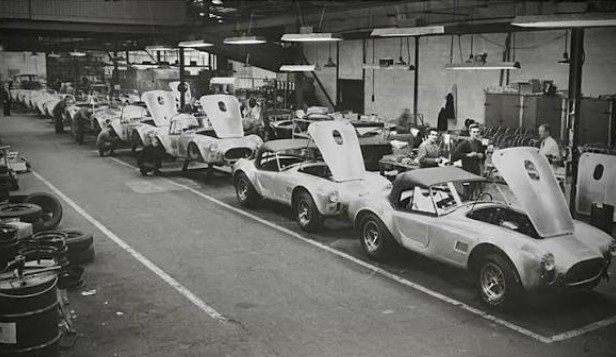
Among the 328 cars that left Thames Ditton, a handful stand out for their provenance, their one-off coachwork, or the stories attached to them.
VPL 441, the Prototype
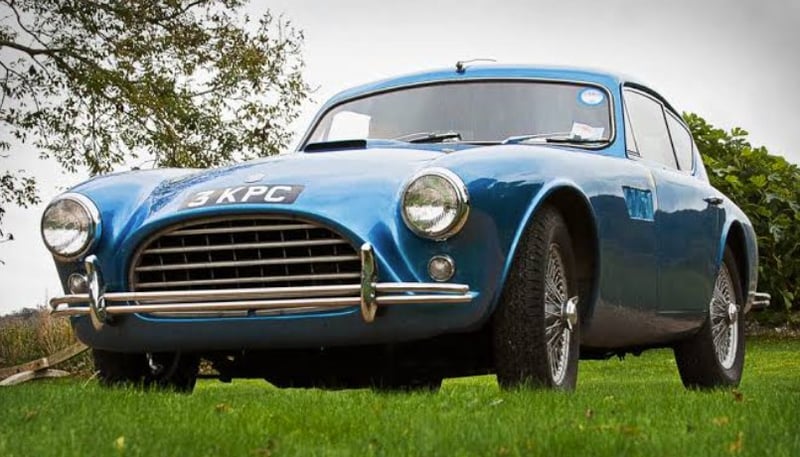
The 1954 show car; used by speed-record legend Donald Campbell in 1954 to 56, painted in leftover 'Bluebird Blue' from his K7 hydroplane, with its AC engine swapped for a Bristol during his ownership; later found abandoned, restored with work completed in 2018, and displayed at the Lakeland Motor Museum.
The original 1954 show car, later used by Donald Campbell and restored after decades off the road.
TAE 618, the Triumph Aceca
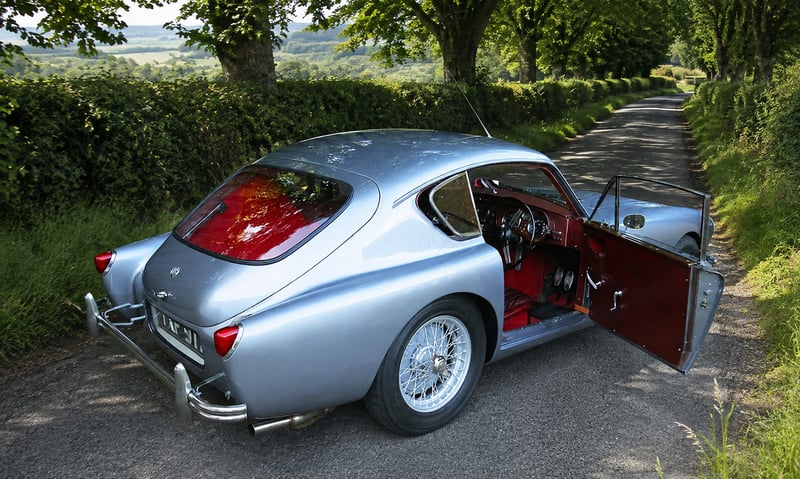
The single factory car, built 2 July 1957, fitted with a Triumph TR3 four-cylinder engine as a low-cost experiment; the 'T' prefix denotes the Triumph unit; later restored on the television series Car SOS.
The sole factory Triumph-engined Aceca, built as a low-cost powertrain experiment in 1957.
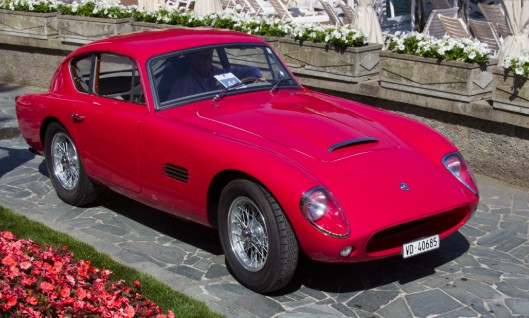
The Ghia-Aigle Cars
Three Aceca-Bristols rebodied by the carrozzeria Ghia-Aigle for Swiss importer Hubert Patthey, with lowered noses and faired-in headlamps.
Three Aceca-Bristols received sleek rebody work by Ghia-Aigle for the Swiss market.
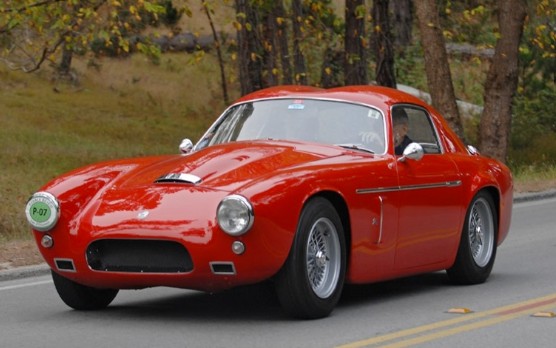
The Zagato Ace-Bristol (BEX 477)
A one-off Zagato-bodied coupé with the trademark 'double bubble' roof, which won its class at the 1958 Coupes du Salon. The Zagato body is a closed coupe, which is why it is sometimes described as an Aceca. It is an Ace chassis with a one-off Zagato body, and this archive has found no Aceca bodied by Zagato.
Zagato-bodied Ace-Bristol BEX 477
Help complete the record
Do you own an Aceca, Aceca-Bristol or Aceca 2.6? The archive is only as complete as the cars that are registered. By submitting your car to the Registry you help historians, restorers and future owners trace the lineage of these hand-built Thames Ditton coupés.