As Tested in 1960,
The Autocar Meets the Aceca-Bristol
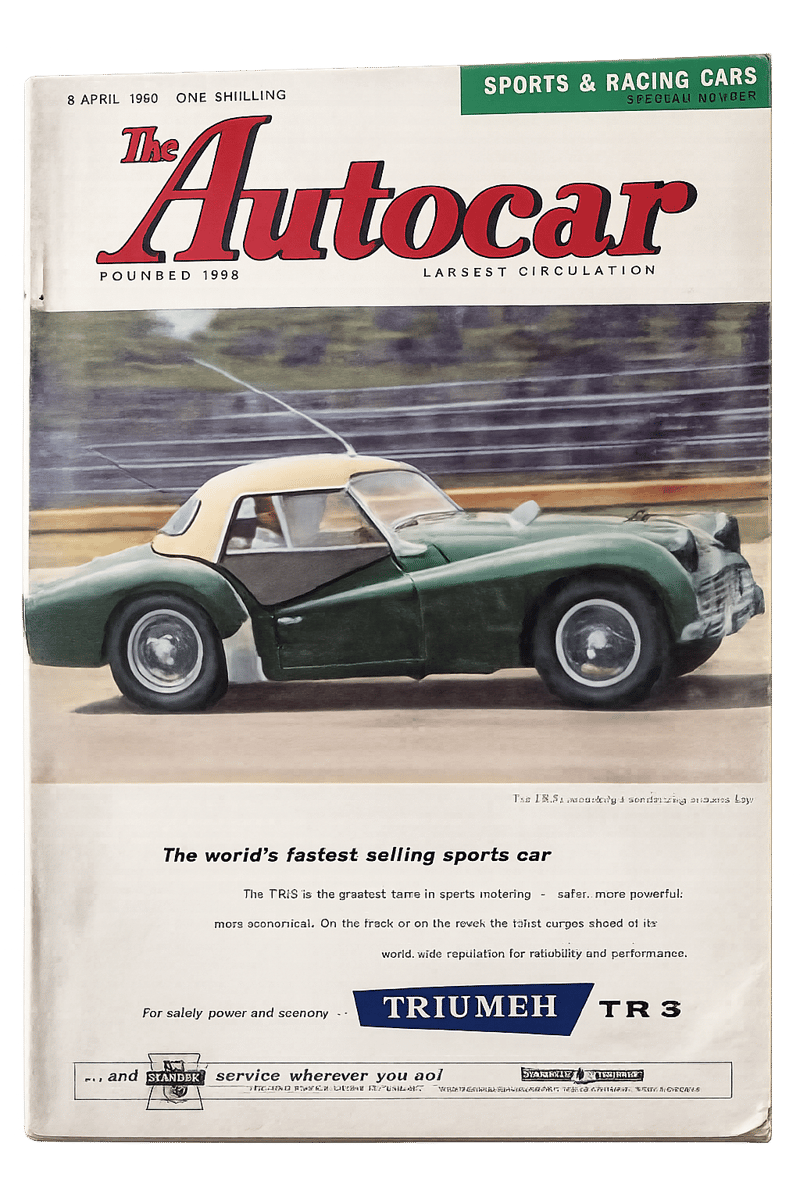
On 8 April 1960, in its "Sports & Racing Cars" Special Number, The Autocar handed back the keys to a Bristol-engined Aceca, registration 33 JPD, after 1,130 miles and Road Test No. 1768. Sixty years on, the verdict still reads beautifully. Here is what they found.
By 1960 the Aceca-Bristol was already a rare proposition: a closed, civilised two-seater that could carry a passenger and luggage to a formal occasion, then behave like a proper sports car the moment the road opened out. The testers were taken with that split personality, and much of the write-up marvels that a single car could be so docile in town and so quick everywhere else.
Under the forward-hinging bonnet sat the 1,971 cc Bristol 100D2 six, the same basic unit, descended from pre-war BMW, that had won its class at Le Mans in AC's hands the previous year. Breathing through three Solex carburettors on a nine-to-one compression, it gave 125 bhp at 6,000 rpm and asked for 100-octane fuel. It would pull cleanly from 20 mph in top gear, yet sweep to its 6,000 rpm limit in the indirect gears with a hardening exhaust note the testers judged exhilarating rather than wearing.
And the car was genuinely fast for its day. A mean 115.5 mph, 0-60 in 10.3 seconds, the standing quarter-mile in 17.8, and 100 mph reached in just over half a minute, all recorded, as it happened, in heavy rain and a gusting wind. Fuel came back at around 20.5 mpg overall, better than 25 if you were gentle, and still 21.5 mpg when cruising near the ton up a then-deserted A5.
The quirks that make it worth reading
This is where the old road test earns its place. The starting handle, the testers noted, could only be fitted once the steering was wound almost to full lock. The owner's handbook declined to tell you where any of the switches were, but cheerfully explained how to lift out the engine, rebuild the gearbox and strip down the final drive. The dashboard carried a manual ignition advance/retard lever in addition to the automatic mechanism: full retard for easy starting and town crawling, full advance for that last edge at the top end. And the twin tailpipes tucked discreetly under the tail weren't merely for show, there was no drone in the cabin to bother the occupants.
Not everything charmed. The brakes, Girling discs at the front, Alfin drums behind, wanted a firm shove in the days before a servo was standard. The heater controls were fiddly. And at very high speed, crossing the ridges between slabs of concrete road, the front could set up a brief weave that settled of its own accord. Small complaints against a car the magazine was plainly smitten with, enough to sign it off as a "truly roadworthy sports coupé."
A closing curiosity: for a special issue given over to sports and racing cars, the cover that week carried not the Aceca but a Triumph TR3, caught at speed on its record run at Monza. The Aceca-Bristol, as ever, went quietly about its business inside.
Source: The Autocar, 8 April 1960, Road Test No. 1768, from the "Sports & Racing Cars" Special Number. Figures and observations reported from the original road test; commentary written for this archive.

About the author
A lifelong classic-car enthusiast in North Yorkshire, near Thornton-le-Dale, who owns and maintains an AC Aceca, writing the single-model reference he always wished existed. Read the full bio.