How to Prop the Bonnet Open on an AC Aceca
The Aceca bonnet is a big, forward-hinged alloy panel. It is not gas-strut assisted and it does not stay up on its own: the prop is small, specific, and easy to miss if you have not opened the car in a while. Get the prop in the right hole, at the right angle, and the lid stays safely out of the way; get it wrong and it can slide, twist, or dent the panel it rests on.
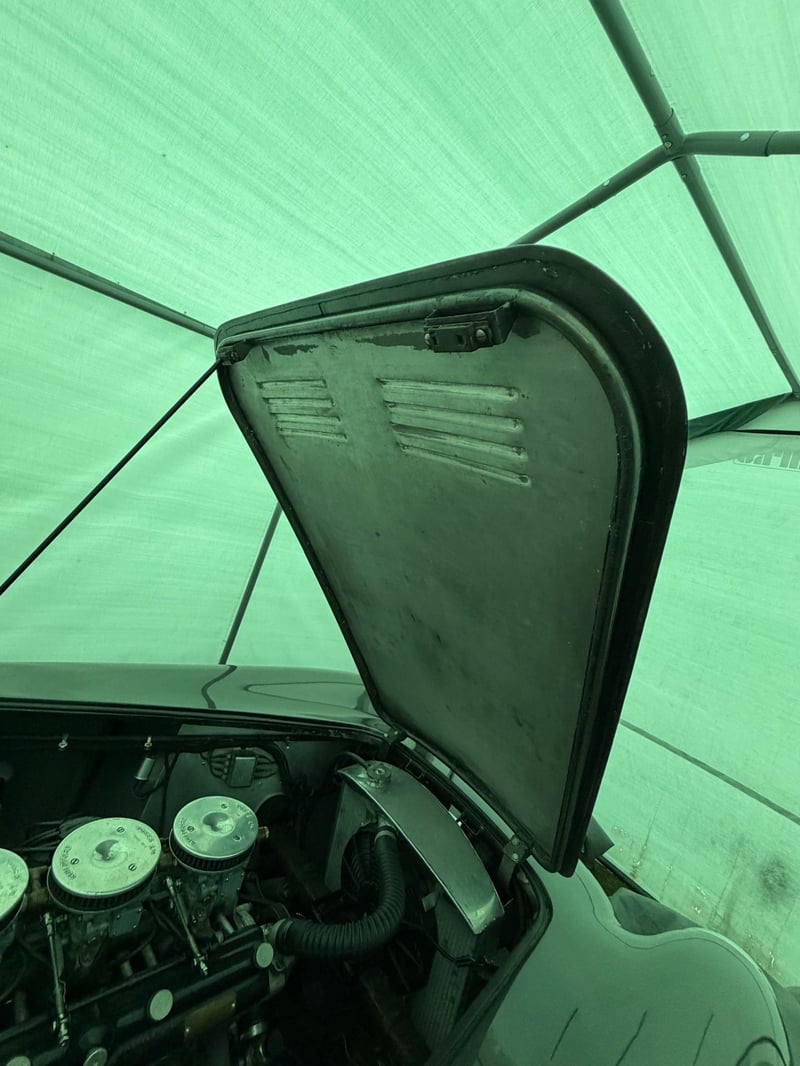
Forward hinge, not rear hinge
The Aceca bonnet is hinged at the front and lifts from the windscreen scuttle edge. That means it opens toward the front of the car and the prop is mounted on the rear (scuttle) side. The hinge line is low, so the panel rises a long way, a lot of its weight is carried forward, which is why the prop must sit near the back to hold the opening angle steady.
Find the prop
Most Acecas carry a short tubular or solid prop rod clipped to the underside of the bonnet or the front bulkhead. The clip is usually close to the centreline. Before lifting the lid, unclip it and make sure the tip is clean; rust flakes, grit or paint on the hooked or rounded end can make it slip in the hole. If your prop is missing, the safest choice is to source a correct replacement rather than improvising with a bar or broom handle, a prop that is the wrong length or the wrong end shape will damage the hole or the panel.
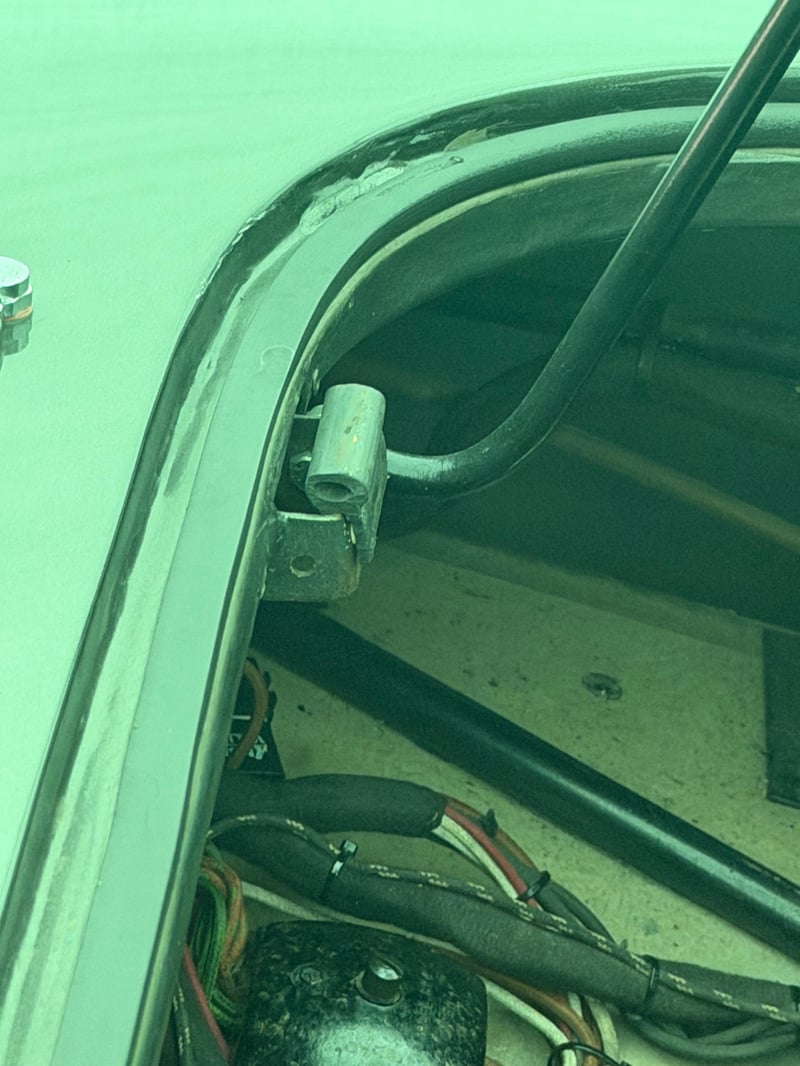
Unclip the prop
It lives clipped near the centreline, under the bonnet or on the bulkhead. Wipe the tip clean.
Lift with both hands
Raise the panel from the scuttle edge, it hinges forward, and hold it at full height.
Find the factory hole
A small drilled hole in the rear lip or a scuttle bracket. Never use a fixing or vent hole.
Seat the prop square
Vertical or leaning slightly back, under compression. If it rattles, it is not secure.
Load-test, then work
A light push down on the bonnet. No creak, no movement at the tip, and you are safe to work.
The safe way to prop it
- Open the bonnet fully with both hands and lower it gently until the prop can reach the scuttle or bonnet lip without stretching.
- Locate the prop hole: usually a small hole in the rear edge of the bonnet or a bracket on the scuttle. The factory hole is drilled to match the prop tip; use the original hole, not a fixing or vent hole.
- Seat the prop squarely so it sits under compression, vertical or slightly angled back, not leaning sideways. If the prop can rattle, it is not secure.
- Give the bonnet a light downward push to confirm the prop is loaded and will not slip. There should be no creaking or movement at the prop tip.
Closing it
Hold the bonnet with one hand, lift the prop free with the other, then lower the lid in a controlled arc. Re-clip the prop before it can roll around the engine bay or drop onto the paint. On a windy day, keep a hand on the panel until the catch is engaged, a forward-hinged bonnet can be caught by a gust and thrown back onto the prop or windscreen.
The external catch sits on the top of the panel, just ahead of the windscreen and alongside the wiper spindles, a small chromed lever that turns to release. Lower the bonnet onto the catch rather than dropping it, then turn the lever and check the panel sits flush along the scuttle shut-line before you walk away.
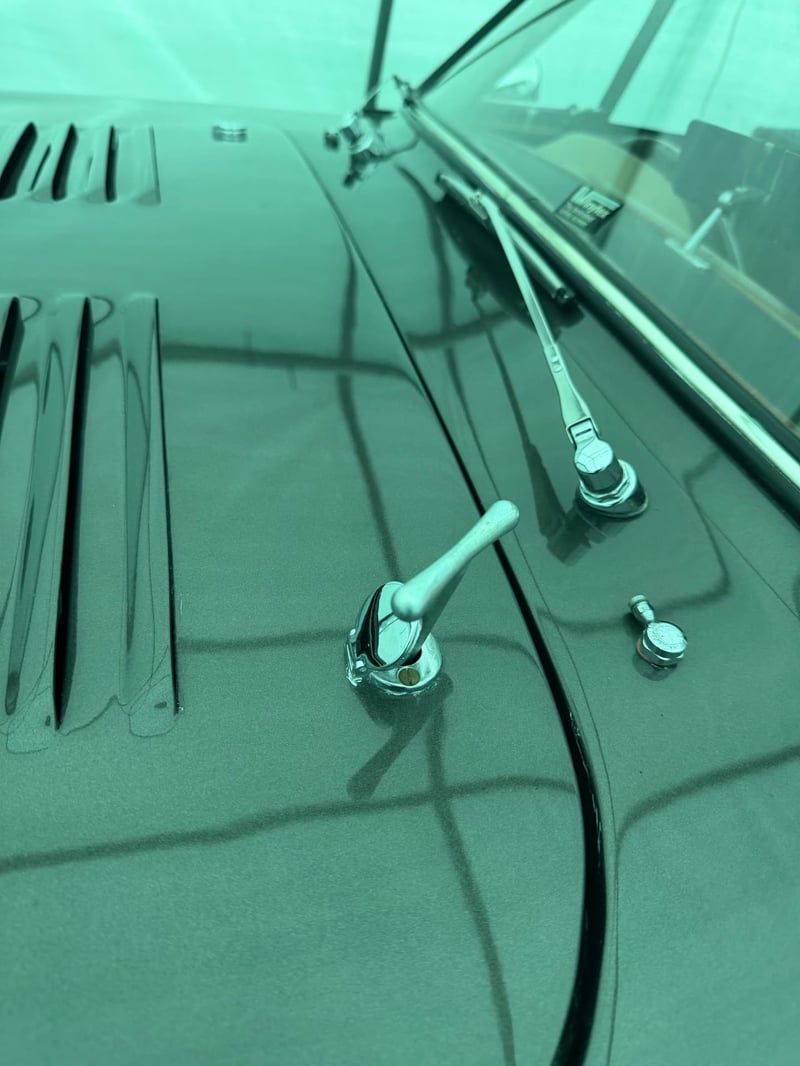
What to watch for
- Spreading hinge brackets: if the catch is adjusted too tight or the hinges are worn, the panel may sit crooked and the prop hole will not line up. Check the hinges and catch first.
- Paint damage: the prop can chip the scuttle paint or the underside of the bonnet if the tip is rough or the angle is wrong.
A quick owner procedure, not a workshop-manual substitute. If the prop geometry looks wrong on your car, compare it with the manual and the original factory holes before altering anything.

About the author
A lifelong classic-car enthusiast in North Yorkshire, near Thornton-le-Dale, who owns and maintains an AC Aceca, writing the single-model reference he always wished existed. Read the full bio.