Positive Earth on the AC Aceca: What It Means
Like almost every British car of its era, the AC Aceca left Thames Ditton wired positive earth, the opposite of a modern car. It sounds arcane, but get it wrong when connecting a battery, a charger or a set of jump leads and you can damage the dynamo, ruin the regulator, cook a modern radio, or start a fire. Here is what positive earth means, why it was used, how to tell whether your Aceca still has it, and how it changes the way you service and check the car.
Confirm against your car
This is a general explanation to help you understand your car, not a substitute for the wiring diagram in your workshop manual, or for an auto-electrician if anything is in doubt. Many Acecas have been converted to negative earth over the years, so never assume: confirm which system your individual car has before you connect anything. Getting polarity wrong can cause expensive damage or a fire.
What "positive earth" actually means
In any car the battery has a positive and a negative terminal, and one of them is bolted to the bodyshell and chassis, the "earth" or "ground", so the metal of the car carries the return current for the whole electrical system. On a modern car it is the negative terminal that is earthed. On a positive-earth car like the Aceca it is the other way round: the positive terminal goes to the chassis, and the negative terminal is the live feed to the loom. Everything else, the wiring, bulbs and motors, is identical; only the direction the current flows is reversed.
The quickest way to picture it: follow the thick earth strap from the battery to the bodywork. On your Aceca, as it left the factory, that strap runs from the positive terminal.
Why British cars were positive earth
The reasons usually given are a mix of physics and habit. Lucas, who made the electrics, held that earthing the positive side makes the spark plug's centre electrode negative, and that this gives a better spark and longer life from the plugs and HT leads (there is genuine physics to that, below). Others pointed to reduced corrosion at connections. And a good deal of it was simply the convention of the day. British makers stayed positive earth long after much of the world had gone negative, right up to the late 1960s, when alternators, transistor radios and the first electronics made negative earth the universal standard.
Is your Aceca still positive earth?
From the factory, yes, every Aceca was positive earth. But over sixty years many classics have been switched to negative earth to run an alternator, a modern radio, USB sockets or electronic ignition. So what matters is what your car is now. Don't go by the model. To check:
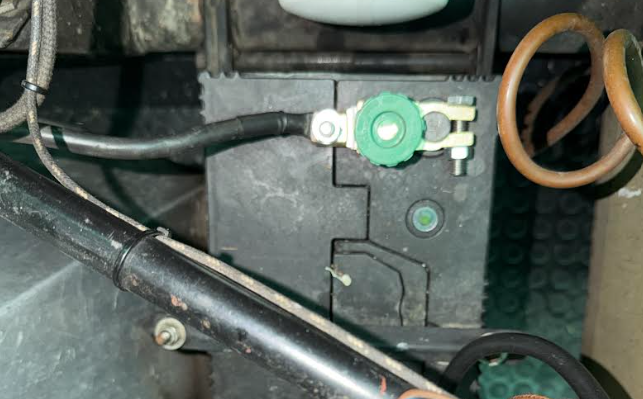
- Which battery terminal wears the earth strap to the chassis. Positive strapped to the chassis means positive earth.
- The ammeter. Correctly wired it reads the right way, showing a charge with the engine running; a needle that sits or swings the "wrong" way is a strong hint the car has been converted, or mis-wired.
- Tell-tales of a conversion: a modern alternator, an electronic regulator, a negative-earth radio, or a note in the history file.
- If in any doubt, an auto-electrician can confirm it in minutes. Once you know, fit a "POSITIVE EARTH" (or "NEGATIVE EARTH") label under the bonnet so nobody, including a future you, or a roadside mechanic, has to guess.
Why polarity matters, what goes wrong if you get it wrong
Connect a battery, charger, jump pack or jump leads the wrong way round and current flows backwards through the car. At best you lose a fuse or a bulb; at worst you can damage the dynamo and destroy the Lucas control box (the regulator), instantly kill a modern radio or any electronic ignition, and cause heavy sparking right at the battery, which, next to petrol and the hydrogen a charging battery gives off, is how fires start.
- The dynamo holds a residual magnetic field of a set polarity, and the Lucas control box points are arranged for a set direction of current. Reverse the system and the dynamo tries to charge backwards and the regulator suffers.
- The ignition coil has a right way round too (next section).
- The gauges: the ammeter reads backwards, and thermal-type fuel and temperature gauges can misbehave.
The ignition coil and your spark plugs
This is the part owners most often get wrong, because the car still runs, just not as well. The coil should be connected so the spark jumps from the plug's centre electrode (the hot one) to the earth electrode. Wired that way the centre electrode is negative and, because a hot surface gives up electrons more readily, the spark needs roughly 15 to 20% less voltage to form. Wire the coil the other way round and the car will still start and run, but the spark is weaker: hard starting, misfires under load or in the cold, and quicker wear of the plugs and HT leads.
Older Lucas coils carry two low-tension terminals marked SW (switch) and CB (contact breaker); later ones are simply marked + and −. Which lead goes where depends on the earth polarity, and the "correct" arrangement was drawn differently in different AC and Lucas diagrams over the years, so this is exactly the detail to take from your own car's wiring diagram rather than a rule of thumb. If you have just changed the coil, converted the car, or are chasing a weak spark, confirm the polarity is right. It can be checked with a spark-polarity test, a cheap in-line LED tester, or the traditional pencil-lead test, or by an auto-electrician. Do not probe an HT lead with an ordinary multimeter; the voltage will damage the meter and you.
How it changes servicing and checks
- Battery: identify the earthed (positive) terminal first. Disconnect the earth (chassis) lead first and reconnect it last, as on any car, but be doubly sure which one that is here. When fitting a battery, get it the right way round; the old Lucas posts are different sizes (the positive post is larger), which is a useful check in itself.
- Charging: a charger connects to the battery's own posts, red/positive clamp to the positive post, black/negative to the negative post, whichever one is earthed. A modern smart charger is fine with the battery; just connect it to the correct posts and keep the clips clear of the earthed bodywork. If the charger or battery isn't clearly marked, stop and check.
- Jump-starting: this is where positive earth catches people out, because a modern rescue car is negative earth. The safe principle is to connect battery terminal to matching battery terminal, positive to positive, negative to negative. Never by earth polarity. Because the Aceca's chassis is live-positive, the usual "clamp the spare lead to the engine block" habit doesn't translate, so keep the final connection at the batteries and away from fuel. The least-risk options are a self-contained lithium jump pack (connected to the battery, observing polarity) or an old-fashioned bump-start, and disconnect any sensitive electronics first. If you are unsure, don't improvise beside a warm engine and a full tank.
- The dynamo, "polarising": if the dynamo has been off the car, replaced, or sat unused so long it has lost its residual magnetism, or if there is any doubt after electrical work, it may need to be "polarised" (briefly flashed from the battery) to the correct earth so it charges the right way. Done wrong it charges backwards and can damage the regulator, so it is a quick job but a polarity-critical one: follow your workshop manual or have a specialist do it. Simply disconnecting and reconnecting the same battery does not require it.
- Modern accessories: assume anything made this century is negative earth. A modern radio, a USB charger, LED bulbs, a sat-nav feed, most electronic-ignition kits, fitted to a positive-earth car without thought, they will not work and many will be destroyed. Either source positive-earth-compatible parts, isolate them properly, or make the considered decision to convert the car to negative earth, a legitimate change many owners make, but one that moves the car away from original and is a subject in its own right.
- Tell the professionals: any garage, tyre bay or recovery driver who might connect a battery or jump the car needs to know it is positive earth before they touch it. The under-bonnet label does that job when you are not there to say it.
In short
The Aceca is positive earth from the factory: the positive terminal goes to the chassis. It changes nothing about how you drive the car, but everything about how you connect a battery, a charger or jump leads, how the coil and dynamo must be wired, and what modern accessories you can add. Confirm which system your car has now, label it, keep the coil polarity right, and treat every battery connection as polarity-critical, and the Aceca's electrics will look after you.
A general guide to understanding your car's electrics, not a substitute for the official workshop manual or the AC and Bristol Owners Clubs. If anything is in doubt, coil polarity, polarising the dynamo, or a conversion, consult a specialist; getting polarity wrong can cause damage or a fire.

About the author
A lifelong classic-car enthusiast in North Yorkshire, near Thornton-le-Dale, who owns and maintains an AC Aceca, writing the single-model reference he always wished existed. Read the full bio.